Gynaecology focus

Gynaecology, digitally organised — from screening to hormone consultation.

GYNFLUENCE is the only practice platform built exclusively for gynaecology practices. AI phone, digital history-taking in gyn language, automatic doctor's letters — so that consultations and practice workflows stay calm and predictable.

For statutory and private practices — KBV- and KIM-compliant
A fast start, clear workflows for 80+ appointment types
Focus: patient flow, longitudinal documentation, relieving the assistant team
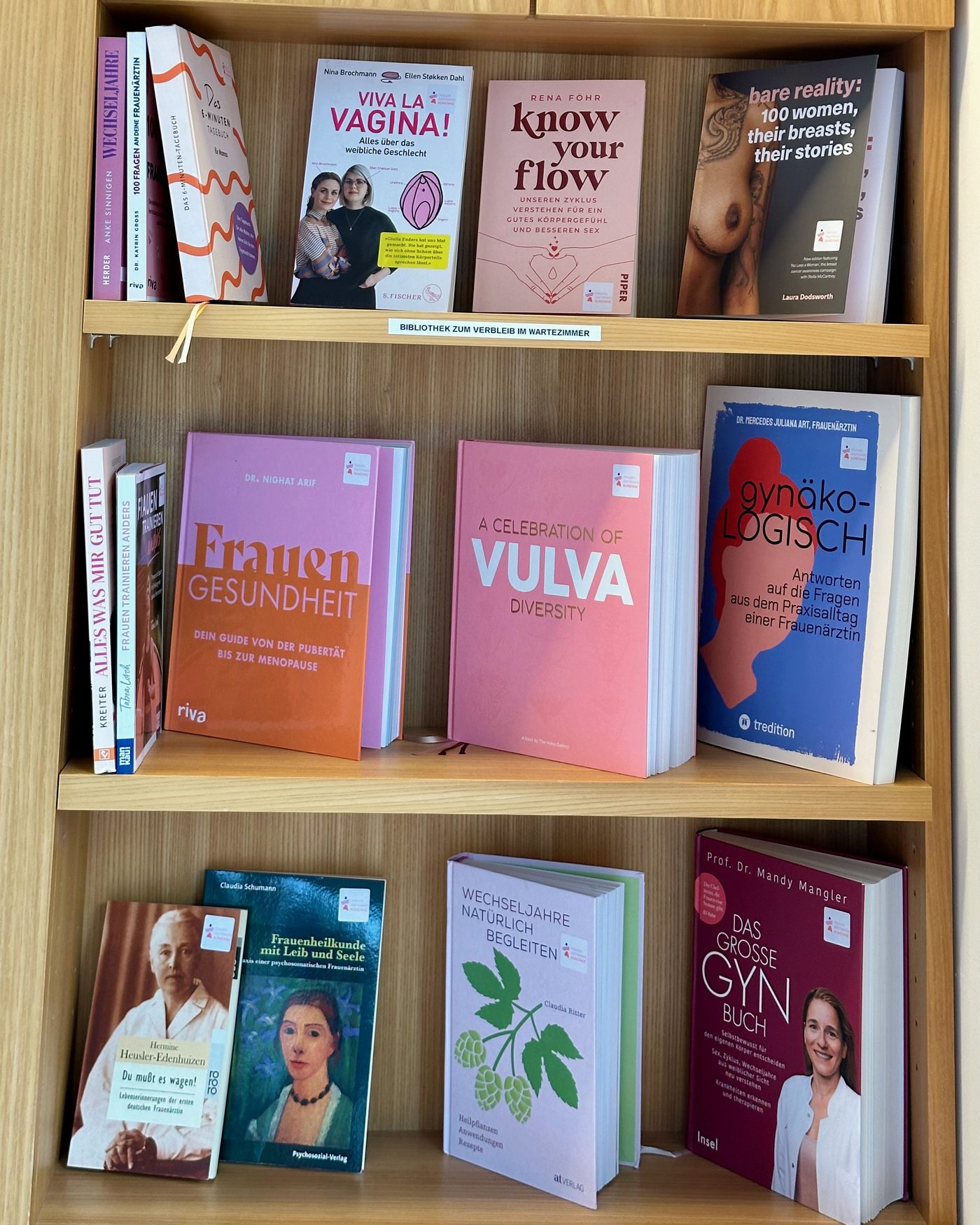
Bücherregal in der Pilotpraxis FRAUEN ÄRZTINNEN KONSTANZ — Fachbücher zu Frauen-Gesundheit

Today · consultation

Screening — 9:00
Hormone consultation — 9:30
Acute: suspected UTI — 10:15
Antenatal check 18+5 — 11:00
IUD change — 11:30
Fertility consultation — 12:00
What makes gynaecology different

Why the gynaecology practice has special requirements.

Gynaecology practices accompany patients for decades — from the adolescent consultation to well beyond the menopause. That means high frequency, many appointment types, sensitive topics, and documentation that carries across stages of life. A platform that doesn't understand this costs time every day.

High call volume, many concerns

Screening appointments, prescription renewals, pregnancy queries, maternity-record requests, acute complaints — all through one switchboard, often without prioritisation.

Continuity across life stages

Patients return over 20–30 years. Cancer screening, hormone course, pregnancies — everything must be cleanly documented and instantly findable.

Mixed cadence in the consulting room

Screening (10 min), hormone consultation (30 min), pregnancy check (15 min), acute appointment (5-min slot). Several logics in parallel, several rooms.

Documentation that has to be fast and clean

Findings, diagnosis, treatment plan, recall — all at once GDPR-compliant, billable under GOÄ/EBM, and captured in two minutes between two patients.

A high volume of documents

Prior findings, maternity records, lab values, external doctor's letters (oncology, endocrinology, midwives), DiGAs. Everything has to be filed and findable.

Sensitive topics, a personal bond

Menopause, miscarriage, fertility, cancer screening — topics where patients need trust and perceive the practice as a whole atmosphere.

From the full operation of FRAUEN ÄRZTINNEN KONSTANZ.

GYNFLUENCE wasn't created in a lab, but in a gynaecology practice with two statutory-insurance seats, five physicians, 15 staff and ~150 patients a day. Every workflow was tested in live operation — before it was rolled out as a module.

The concrete benefit

What GYNFLUENCE improves in the gynaecology practice.

Three effects visible from week 1. Not a promise from a whitepaper — measured in the Konstanz pilot practice.

Prepared patients

History, symptom course, prior treatments — all captured in a structured way in advance. No more follow-up questions in the consulting room, more time for the actual consultation.

Clear courses over the years

Hormone consultation, cancer screening, pregnancy, menopause — courses summarised automatically. "Where did we leave off?" answers itself in two seconds.

A relieved assistant team

Phone, check-in, prescription requests, recall — largely automated. The team gains time for the patients in the building, not the ones on the phone.

The modules in detail

The key features for gynaecology.

Every module is gyn-specifically configured — not generic, not "also for gynaecologists". But built for the gynaecology practice.

AI phone — reception 24/7

Captures concerns in a structured way (name, date of birth, callback number, reason) and prioritises acute cases. Understands southern-German dialects and responds empathetically to sensitive topics.

Typical concerns:
  • Screening appointment · cancer screening · antenatal care
  • Acute: pelvic pain, bleeding, suspected thrush, UTI
  • Prescription renewal: pill, HRT, vaginal cream
  • Maternity-record appointment, ultrasound request
  • Results query: Pap, HPV, ultrasound
Digital history-taking — gyn-structured

Patients provide relevant information in advance — gyn-specific questionnaires, served automatically depending on the reason for the visit. Ideal for high appointment cadences.

Example questions by reason:
  • Cancer screening: cycle, last screening, family history
  • Hormone consultation: symptoms, last menstrual period, prior treatments, effect
  • Antenatal care: gestational week, prior findings, pre-existing conditions, medication
  • Acute: complaints, duration, severity, self-treatment
  • Fertility: cycle, pre-existing conditions, partner history
Self check-in — tablet in the waiting room

Patients check themselves in; missing details are added during the wait. Reception sees instantly who has arrived and what is still outstanding.

What is asked:
  • Insurance status, health insurer, address
  • Symptom update since the last visit
  • Current medication, new allergies
  • GDPR consent and self-pay (IGeL) information
AI consultation assistant — documentation during the appointment

Creates structured notes during the appointment: history, findings, assessment, plan. Especially effective with high case numbers and many follow-up checks.

Output fields:
  • Subjective (the patient's account)
  • Objective (examination findings, ultrasound, Pap)
  • Assessment (diagnosis, suspected diagnosis)
  • Plan (treatment, recall, referral, sick note)
Doctor's-letter generation — automatic

Generates structured doctor's letters and short record summaries from the existing data — gyn-specific templates for oncology, endocrinology, midwives and hospitals.

Typical reasons for a letter:
  • Referral to breast diagnostics, oncology, endocrinology
  • Maternity-record handover to clinic / midwife
  • Findings letter to the GP (hormone status, Pap course)
  • Patient letter with a treatment recommendation
OCR — digitising documents

Helps with prior findings, external doctor's letters, lab reports and maternity records: filed cleanly, found faster, more usable. KIM-capable.

What is processed:
  • Pap and HPV findings (cytology)
  • Mammography and ultrasound findings
  • External doctor's letters (clinics, endocrinology)
  • Lab values (hormone status, TSH, vitamin D, AMH)
Billing — GOÄ + EBM + IGeL

Service documentation and billing kept traceable, optionally handed over to accounting systems. Self-pay (IGeL) consent and documentation kept legally sound.

What is supported:
  • EBM codes for statutory services (screening, antenatal care)
  • GOÄ for private and self-paying patients
  • Self-pay (IGeL) templates: HPV vaccination, extended ultrasound, hormone consultation
  • Statutory-accident-insurance billing for work-related complaints
Appointment calendar — mixed cadence + recall

Acute slots, screening appointments, hormone follow-ups, antenatal-care series — all cleanly mapped, including recall logic for annual cancer screening and HRT review.

Rule examples:
  • Cancer screening: annual recall, reminder 14 days before
  • Antenatal care: 2/3/4-weekly series by gestational week
  • HRT review: 3 months after starting, then annually
  • Acute slots reserved in the morning, bookable online
Practice workflows

How a typical appointment runs with GYNFLUENCE.

From first contact to billing — two concrete workflows from everyday gynaecology practice.

Acute patient

Acute complaints — from the call to the close

An example flow for a patient with acute pelvic pain

Result: fewer follow-up questions, a faster appointment start, clear documentation, recall scheduled.

1
Patient calls → the AI phone captures the concern in a structured way and rates urgency ("acute", "pelvic pain since yesterday")
2
Appointment booking → an acute slot is assigned automatically or escalated to the team
3
Pre-visit history → symptoms, duration, cycle, pre-existing conditions, self-treatment
4
Check-in on the tablet → missing details are added, insurance status checked
5
Treatment → the history is already there, structured documentation during the appointment (consultation assistant)
6
Close → treatment plan, recall, warning signs, sick note if needed
7
Billing → EBM/GOÄ from the service documentation, done
Life-stage support

Hormone consultation — a course over years

An example flow for a patient on an HRT menopause course

Result: better continuity, a faster overview, less "where did we leave off?".

1
Recall series → 3 months after starting HRT, then every six months, then annually
2
Short pre-visit questionnaire → current symptoms, effect, side effects, bleeding status
3
Appointment → the previous course is summarised automatically, treatment is adjusted
4
Documentation → structured into the longitudinal record, with a trend chart (symptom scale over time)
5
Follow-up → the next review appointment is scheduled, a short summary goes to the patient
6
Billing → complete and traceable (GOÄ hormone consultation, self-pay components)
Next step

Book a 15-minute call — 30 minutes, free.

We listen to your practice's situation, show you the platform, and discuss which path makes sense. No pitch, no obligation — just a conversation between practitioners.

Book a 15-minute call